How Much Does Medical Billing Cost?
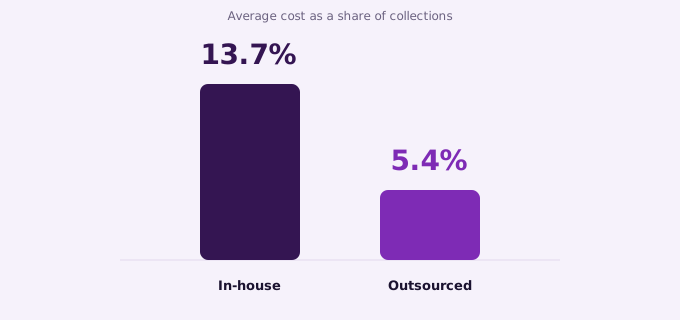
In-house medical billing costs an average of 13.7% of collections (MGMA). Outsourced billing typically costs 4–6% of collections. The gap — up to 9 percentage points — represents significant recoverable revenue for most practices. This guide breaks down both models in detail.
The two models: in-house vs outsourced
Medical billing costs fall into two broad categories depending on how a practice manages the function. In-house billing uses employed staff — a biller, coder, and possibly an A/R specialist — working directly for the practice. Outsourced billing transfers the function to a third-party company that handles billing on the practice's behalf, typically for a percentage of what they collect.
In-house billing costs
MGMA research consistently places in-house billing at an average of 13.7% of collections when all costs are accounted for. That figure includes salaries and benefits for billing staff, costs of billing software and clearinghouse fees, training and certification, compliance overhead, and the hidden cost of errors — denied claims, undercoding, and missed charges — that an undertrained in-house team generates. A fully-loaded in-house medical billing department can cost $80,000–$120,000 per year for a solo or small practice, even before accounting for revenue lost to billing errors.
Outsourced billing costs
Outsourced medical billing is typically priced as a percentage of collections — the industry standard range is 4–6% of what the billing company collects on your behalf. Some companies charge flat fees per claim ($4–15) or hourly rates, but percentage-of-collections is by far the most common and most aligned model. Importantly, a well-structured outsourced billing contract charges nothing for claims that don't pay — so the billing company's revenue grows only when yours does.
See the gap for your own collections
What drives the cost gap
The 7–9 percentage point gap between in-house and outsourced billing comes from several factors. Outsourced billing companies spread compliance, training, and software costs across hundreds of clients. They employ specialists — dedicated coders, A/R analysts, denial management teams — that no single practice could justify hiring. They achieve first-pass clean claim rates (typically 97–98%) that in-house teams rarely sustain. And they eliminate the single largest hidden cost of in-house billing: staff turnover, which can halt billing entirely for weeks when a key biller leaves.
The bottom line
For most practices, outsourced billing is less expensive and produces better collections outcomes than in-house billing. The exception is a very large practice (typically 15+ providers) with a well-managed, certified internal billing team — though even at that scale, outsourced billing often remains competitive. The question isn't just cost; it's total revenue recovered. A billing company that charges 5% but increases your collections by 15% is dramatically better value than an in-house team costing 12% while leaving denials unworked.
Common questions about billing costs
Ready to fix your billing?
Get a free, no-obligation billing audit — we\'ll show you exactly where your practice is losing revenue.
Get a free billing audit